How to Choose the Best Plastic Box for Your Needs?
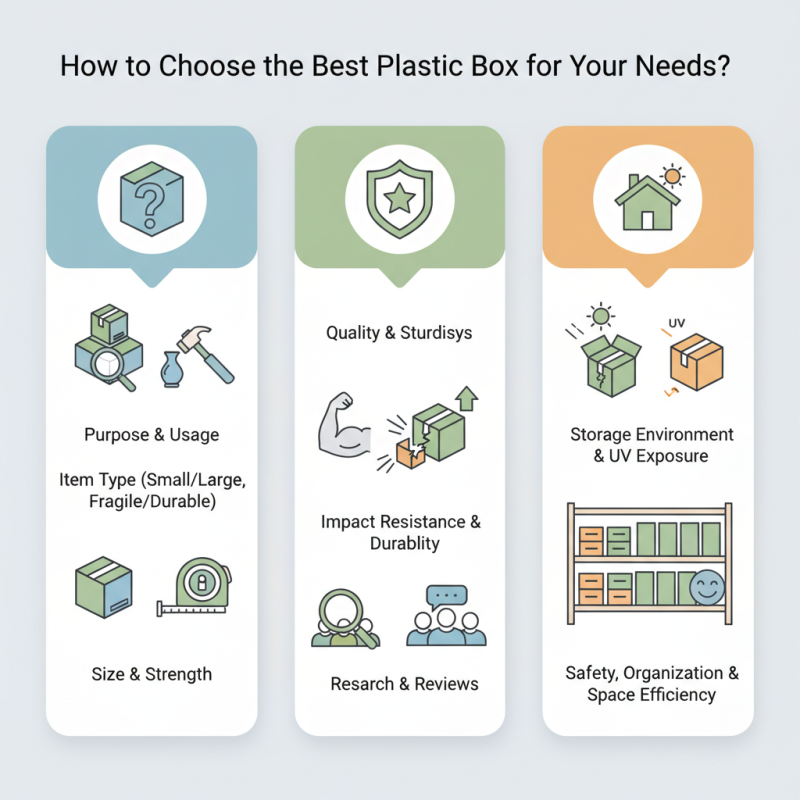
When selecting a Plastic box, various factors come into play. It's essential to understand the purpose and intended usage of the box. Consider the items you plan to store. Are they small or large? Fragile or durable? The type of items dictates the size and strength of the plastic box you need.
Quality matters in plastic boxes. Look for options that are sturdy and resistant to impact. Thin plastic can break easily, leading to unwanted messes and broken items. Research different brands and materials to find reliable choices. Checking customer reviews can offer insights into performance and durability.
Reflect on your storage environment. Will the box be exposed to direct sunlight? Some plastics degrade over time when exposed to UV rays. Consider this when making your choice. The right plastic box can keep your items safe and organized, enhancing your space efficiently.
Understanding Different Types of Plastic Boxes: Materials and Uses
When choosing a plastic box, it’s essential to know the materials and their uses. Plastic boxes are made from various types of plastic, each with unique properties. Polypropylene is strong and resistant to chemicals. It's perfect for organizing tools or crafting supplies. Polyethylene, on the other hand, is flexible and lightweight. Use it for food storage or household items.
Tips: Always check the plastic type before purchase. Each type has limitations you should consider. For example, some plastics can’t withstand high temperatures. If you need airtight storage, look for sealed designs. They protect food or sensitive materials effectively.
Consider your intended use. Clear plastic boxes allow easy visibility of contents. This feature helps save time when searching. Opaque options offer privacy and a sleek look for decorative storage. However, they may obscure the contents. Reflect on your needs and choose a design accordingly.
Comparison of Different Types of Plastic Boxes
Assessing Size Options: How Volume and Dimensions Affect Choices
When selecting a plastic box, dimensions and volume greatly influence your decision. Assess what you’re storing. Will it be clothing, toys, or tools? The size of the items dictates the box's dimensions. Consider using a measuring tape to determine the available space for storage. A box that is too big may lead to a cluttered look, while one that is too small can result in overflowing items.
Tips: Always measure the intended space before purchasing. An accurate measurement helps to avoid any surprises after your box arrives. For larger items, prioritize height and width. For smaller items, depth may be less critical.
Evaluate the volume as well. A box with greater volume can hold more items but might be cumbersome. Too heavy a box can become difficult to carry. Think about your capability to lift and move the box regularly. Finding balance is essential, as even a well-sized box can be impractical if it does not suit your needs. Each choice requires careful consideration and reflection to ensure it meets your standards.
How to Choose the Best Plastic Box for Your Needs? - Assessing Size Options: How Volume and Dimensions Affect Choices
| Box Type | Dimensions (L x W x H) cm | Volume (liters) | Best Use Case |
| Small Box | 30 x 20 x 15 | 9 | Storing Accessories |
| Medium Box | 45 x 30 x 25 | 34 | Toys and Games |
| Large Box | 60 x 40 x 35 | 84 | Seasonal Storage |
| Extra Large Box | 90 x 60 x 50 | 270 | Holiday Decorations |
Evaluating Durability: The Importance of Thickness and Impact Resistance
When selecting a plastic box, evaluating durability is essential. Thickness and impact resistance significantly influence longevity. Reports indicate that thicker materials generally withstand forces better than thinner designs. According to the Plastics Industry Association, a thickness of at least 2mm is often recommended for good structural integrity. This is especially important for boxes used in industrial settings, where exposure to heavy items is common.
Impact resistance also affects a box's performance. Plastic types, like polypropylene and polycarbonate, offer excellent durability against shocks. A study from the American Society for Testing and Materials shows that impact-resistant plastics can endure impacts upwards of 80% better than conventional polymers. However, higher impact resistance may come at a cost; these materials can be pricier and heavier.
The right balance of thickness and impact resistance will depend on your specific needs. Consider how your box will be used. For light storage, thinner options may suffice. Yet, neglecting to assess these factors could lead to breakage and loss. It’s important to weigh your choices carefully.
Identifying Storage Needs: Clear vs. Opaque Boxes for Visibility
When choosing a plastic box for storage, consider your visibility needs. Clear boxes allow you to see their contents at a glance. This saves time and effort when searching for items. You can quickly identify what you have and what needs replenishing. If organization is key, clear boxes are a great option.
Opaque boxes, on the other hand, offer a different kind of functionality. They provide a clean and uniform look but hide the contents. If you want to maintain a tidy appearance, opaque boxes are ideal. However, you may find it hard to remember what’s inside. This can lead to unnecessary purchasing or cluttered spaces.
Balancing visibility with aesthetics is crucial. Reflect on your priorities. Are you looking for easy access or a streamlined appearance? Evaluate your storage habits. Sometimes a mixture of both types may work best. Experiment and adapt based on what you learn from your experiences. Finding the right fit takes time, and that’s perfectly okay.
Cost vs. Quality: Budgeting for Long-Term Plastic Box Solutions
Choosing the right plastic box involves more than just selecting a container. Cost and quality play pivotal roles in this decision. It's essential to balance your budget with the longevity of the product. Invest in a high-quality box, and you'll likely avoid recurring expenses due to damage or wear. Lower-cost options might seem appealing initially. However, over time, these cheaper choices can lead to added costs as they deteriorate quickly.
Evaluating the materials used is crucial. Thicker walls generally offer better durability but may come at a higher price. Reflecting on your usage is also beneficial. For example, if you need a box for heavy-duty storage, opting for higher quality might save you money in the long run. On the flip side, if your needs are temporary or less demanding, a cost-effective solution may suffice.
Take time to assess various features. Locking mechanisms, stackability, and ventilation could enhance functionality but might increase the cost. A careful, informed choice should consider both immediate needs and future use. As you think about your options, challenge yourself to find a balance that reflects your real requirements. Don't rush the decision; sometimes, a little reflection leads to better outcomes.