
How to Choose Product Packaging in 2026?

In 2026, Product Packaging has to do more than look polished on a product page. It must protect the item, fit the shipping route, communicate essential information, and feel practical in a customer’s hands. A glass jar may need a molded insert; a refill pouch needs a reliable seal and clear opening instructions. Small details matter. A loose cap, smeared label, or oversized mailer can turn a promising design into a costly return or disappointing first impression.

Choosing well starts with evidence, not a trend board. Compare materials against product weight, moisture, temperature, handling, and storage time. Ask suppliers for specifications, sample runs, and realistic lead times. Then test packages through ordinary packing and delivery conditions. Track damage, packing speed, material use, and customer feedback. Keep claims specific: recyclable, recycled-content, and compostable mean different things, and availability can vary by location. Verify claims with documentation and local collection guidance. A premium finish may photograph beautifully. It may also add cost without improving protection or usability. A beautiful mockup can still mislead. Revisit the choice after pilot orders, because real handling can expose problems a desk review misses. No option is perfect. The goal is to understand each trade-off and choose packaging that works for the product and its buyers.
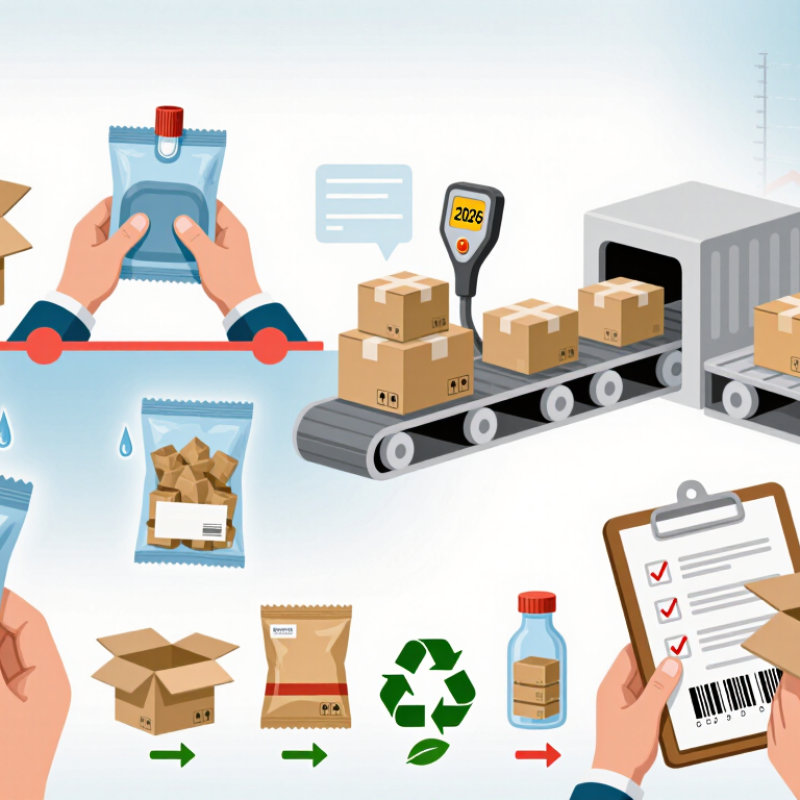
How to Choose Product Packaging in 2026?

Identify Product Needs, Handling Conditions, and Customer Expectations

How to Choose Product Packaging in 2026?

Start with the product itself. A dry snack, a glass jar, and a folded garment need different protection. Consider weight, shape, moisture sensitivity, and how easily the item can break or leak. A snug fit can reduce movement, but overly tight packaging may frustrate customers. Small details matter.

Then map the journey from packing table to doorstep. Will parcels sit in a humid warehouse, stack under heavier boxes, or travel over rough roads? Check closures, seams, and cushioning under realistic conditions. A simple drop test can reveal shifting or cracks, though it cannot represent every delivery route. Test it wet, too, if moisture is a concern.

Customer expectations matter just as much as protection. People may want packaging that opens without scissors, stores neatly, and avoids excess material. Ask a few regular customers to open a sample and describe what felt awkward. Their feedback may challenge your assumptions. Compare options using total cost, damage risk, and ease of packing—not appearance alone. I’d still be cautious about choosing the lightest option before a small shipping trial; saving material means little if products arrive damaged.

How to Choose Product Packaging in 2026? — Identify Product Needs, Handling Conditions, and Customer Expectations

U.S. packaging recycling rates vary by material. Use recyclability as one customer-expectation factor alongside product protection, shipping conditions, and handling requirements.

Rates are national averages, not guarantees for local recycling access. Source: U.S. EPA, 2018 Facts and Figures about Materials, Waste and Recycling.

Compare Packaging Materials, Sustainability, and 2026 Regulations

A useful packaging choice starts with the product and its journey. A glass jar protects against moisture, but its weight can increase shipping impacts. A paper carton is lighter, yet may fail when exposed to damp storage. Test the actual pack: stack it, drop it, and check whether labels and closures separate cleanly. No material wins every time.

Recovery data adds context, but geography matters. The US Environmental Protection Agency reported recycling rates of 80.9% for paper and paperboard packaging and 13.6% for plastic packaging in 2018. These figures are dated and do not predict local outcomes. The OECD’s Global Plastics Outlook estimated that packaging generated 40% of global plastic waste in 2019. That is a warning, not proof that every plastic format should be replaced. A coated paper pouch may be hard to recycle, while a simple plastic pack may fit existing collection systems. Imperfect trade-offs remain.

For European sales, Regulation (EU) 2025/40 entered into force on 11 February 2025 and generally applies from 12 August 2026. It introduces packaging requirements, including recyclability rules scheduled for 2030. Check the relevant material category, labeling duties, and national producer-responsibility rules before approving artwork. Requirements differ across markets. A lighter package can reduce freight, but only if it still protects the product and avoids damage in transit.

How to Choose Product Packaging in 2026? — Compare Packaging Materials, Sustainability, and 2026 Regulations

Compare packaging by product protection, material use, local end-of-life options, and the rules that apply in your target markets. Recycling access and regulatory requirements vary by location; confirm local requirements before finalizing a design.

Packaging material Typical strengths Key trade-offs End-of-life considerations 2026 compliance considerations Often suitable for
Corrugated fiberboard Lightweight relative to its protective structure; available in many sizes; useful for shipping and stacking. Can lose strength when wet; coatings, laminates, and attached components can complicate recycling. Commonly collected for paper recycling where local programs accept it. Keep clean and dry; separate non-paper components when practical. In the EU, packaging minimization and recyclability requirements under the Packaging and Packaging Waste Regulation (PPWR) are relevant. Avoid unnecessary material and check whether coatings affect recyclability. E-commerce shipping, appliances, household goods, and outer transport packaging.
Paperboard and molded fiber Can be formed into cartons, trays, and protective inserts; often useful where a fiber-based format can replace a more complex structure. May provide less moisture or oxygen protection than a barrier-coated or plastic format; coatings and food residue can affect recovery. Acceptance depends on the item, coatings, contamination, and local collection rules. “Fiber-based” does not automatically mean recyclable in every system. For food-contact use, applicable food-contact requirements still apply. In the EU, assess the complete package—including barriers, coatings, and inks—against PPWR requirements. Dry foods, cartons, product inserts, and protective trays where the required barrier performance is modest.
Glass Provides a strong barrier to gases and moisture; compatible with many products when the correct glass and closure are selected. Heavy and breakable, which can increase transport impacts and handling needs. Closures and labels may need separate processing. Can be recycled where collection and processing systems accept the relevant glass type. Color and local sorting rules can matter. EU PPWR design and packaging-minimization obligations may apply. For food and drink, verify food-contact suitability and any market-specific labeling or deposit requirements. Beverages, sauces, cosmetics, and products requiring a strong barrier or a reusable-container system.
Aluminum Lightweight compared with glass; offers a strong barrier to light, moisture, and gases; useful in cans, foil, and some flexible structures. Production impacts can be significant; foil joined to paper or plastic can be difficult to separate and recover. Metal containers are collected in many recycling systems, but acceptance and sorting vary. Check local guidance for foil and composite formats. EU PPWR requirements can apply to metal packaging as well as other formats. For food contact, confirm the suitability of the metal and any internal coating. Beverage cans, food cans, closures, and barrier-sensitive products.
Rigid PET Lightweight and transparent; provides useful impact resistance. PET bottles are collected in many established recycling systems. Collection, sorting, color, labels, closures, and package design affect recovery. Not every PET tray or format is accepted in every locality. Check local acceptance for the exact format; bottle collection does not necessarily mean that PET trays or other PET items are accepted. EU PPWR includes design-for-recycling and recycled-content provisions for plastic packaging, with requirements and timelines depending on the provision and package type. Confirm the applicable rules for the market and format. Beverages, personal-care products, and products needing a lightweight transparent container.
Rigid HDPE Durable and relatively resistant to many chemicals; available in opaque and translucent containers. Opaque containers limit product visibility; compatibility must be tested for the specific product, closure, and storage conditions. Accepted by many curbside systems, but local rules and acceptance of colored or specialized containers differ. As plastic packaging, it may be subject to relevant PPWR design, labeling, and recycled-content provisions in the EU. Verify food-contact or chemical-container rules for the intended use. Household liquids, personal-care products, and some chemical products.
Flexible multi-layer packaging Can combine layers to provide barriers, sealing, and low package weight for products that need protection. Different materials bonded together can make mechanical recycling difficult; thin formats may also be missed by some sorting systems. Acceptance is limited or location-specific. Confirm that a real collection and processing route exists for the exact structure before making a recyclability claim. EU PPWR recyclability requirements make material structure and design important. Do not assume that a “recyclable” claim is valid in every market or that a collection point guarantees recycling. Snacks, coffee, powders, and products requiring a tailored moisture, oxygen, or aroma barrier.
Compostable packaging May be suitable for specific applications where the material is certified for the intended composting conditions and collection is available. “Compostable” does not necessarily mean home-compostable or that the item will break down in nature. It may contaminate recycling streams if sorted incorrectly. Requires the appropriate composting conditions and a facility that accepts the specific item. Clearly communicate disposal instructions and check local access. EU PPWR contains requirements for compostable packaging in specified applications; it does not make all packaging compostable by default. Check the precise product category and applicable rules. Selected food-service or organic-waste applications where local collection and treatment are confirmed.

Regulatory checks to include in a 2026 packaging review

Market or topic What to check Practical action
European Union — PPWR Regulation (EU) 2025/40 entered into force on 11 February 2025 and generally applies from 12 August 2026. Some obligations have later or otherwise specific timelines. Review the regulation and relevant delegated or implementing measures for the package type, market, and obligation. Assess packaging minimization, recyclability, labeling, and any applicable material-specific provisions.
United States — state requirements Packaging extended producer responsibility and related requirements vary by state; there is no single nationwide packaging EPR rule that replaces state checks. Identify every state where products are sold. Check current producer definitions, registration, reporting, fees, exemptions, and deadlines with the relevant state agency or program.
Food-contact packaging Materials, coatings, adhesives, and inks may be subject to food-contact requirements in the destination market. Obtain supplier compliance documentation and confirm that the complete package is suitable for the food type, temperature, and intended contact conditions.
Environmental claims and disposal labels Claims such as “recyclable,” “compostable,” or “made with recycled content” need to match the package and the applicable market rules and guidance. Keep evidence for each claim, avoid broad claims when access is limited, and use disposal instructions that reflect local collection and processing.
Selection tip: Start with the protection the product genuinely needs, then compare the lightest practical designs and verify the local collection route. A material label alone does not establish that a finished package is recyclable, compostable, or compliant.

Official references: EU Packaging and Packaging Waste Regulation (EU) 2025/40; U.S. FDA: Food Packaging and Food Contact Substances. Check relevant state and local government sources for current U.S. packaging requirements and collection guidance.

Evaluate Product Protection, Shelf Appeal, and User Experience

How to Choose Product Packaging in 2026?

Evaluate Product Protection, Shelf Appeal, and User Experience

Start with the journey your product must survive. A glass jar faces different risks from a soft pouch. Test packages after drops, vibration, and temperature changes that match real shipping conditions. Check seals, corners, and closure strength. A box that looks sturdy may still let items rattle. Test it.

On a crowded shelf, clear visual hierarchy matters. Make the product type and key benefit easy to spot, then use color and texture to support recognition. Avoid tiny text and glossy finishes that hide important details under store lighting. The 2023 Trivium Packaging Global Buying Green Report found that 82% of surveyed consumers were willing to pay more for sustainable packaging. That preference matters, but it does not excuse confusing labels or fragile construction.

User experience begins at the first touch. Can shoppers open the pack without scissors? Can they reseal it, pour cleanly, or store it without spills? The U.S. EPA’s 2018 Facts and Figures report estimated that containers and packaging generated 82.2 million tons of U.S. municipal solid waste. This older figure is a useful reminder to assess material use alongside protection. Reducing material too aggressively can cause breakage and waste. There is no perfect balance. Trial packs with real users, note where they struggle, and revise the design—even if the first draft looks polished.

Compare Costs, Suppliers, and Customization Options

How to Choose Product Packaging in 2026?

Packaging quotes are useful only when they describe the same job. Compare unit price, minimum order quantity, setup fees, delivery, and expected lead time. A low per-box cost can look less attractive after freight or printing plates are included. Ask each supplier to quote the same size, material, finish, and order volume. Small details matter.

Supplier evaluation should go beyond the sales estimate. Request a physical sample and check its folds, adhesive, print alignment, and fit around the product. Ask how production defects are handled and whether repeat orders use the same specifications. A sample can feel sturdy on a desk but behave differently in a packed shipment. That gap deserves attention.

Customization also changes cost and production time. A custom insert may reduce movement in transit, while a special coating can add expense without improving protection. Start with the product’s real needs: weight, fragility, shelf display, and storage space. Compare a standard size with a custom structure before committing to tooling. The comparison is rarely neat. Estimates can shift when artwork or dimensions change, so confirm what each quote includes. A modest design adjustment may save material, but it should be tested with a packed sample before approval.

Test Packaging Performance and Confirm Compliance Before Launch

Before launch, test the package with the product inside. Empty cartons can hide problems that appear only under weight or pressure. Run drop, compression, vibration, and moisture tests that reflect the expected shipping route. Record the test conditions and any damage, including loose closures, crushed corners, or leaks. Small details matter.

Check performance on the actual packing line, too. A package may survive transport but slow filling or sealing. Watch for jams, uneven seals, and labels that wrinkle after handling. The first trial may not go smoothly. That is useful evidence, not a reason to skip testing. Adjust one feature at a time, then retest.

Compliance depends on the product and the markets where it will be sold. Confirm applicable packaging, material, labeling, and recycling-claim requirements with qualified compliance specialists. Request current material specifications and test reports from suppliers, and verify that documents match the final package. Keep dated records of approvals and revisions. A missing document can delay a launch, even when the package looks ready.