Choosing a reliable packaging partner requires more than comparing glossy catalogs and attractive factory photographs. China Top 10 Custom Pet Bottle Manufacturers You Can Trust? examines suppliers through practical purchasing criteria. These include production capacity, mold development, PET material quality, customization experience, and communication reliability. The goal is not to promote the largest factory automatically. It is to identify manufacturers that can consistently deliver suitable Custom Pet Bottles for real commercial requirements.
A dependable supplier should explain bottle weight, neck finish, capacity, wall thickness, and packaging methods clearly. Product samples should arrive with accurate dimensions and secure caps. Leak testing matters. So does resistance to pressure, transportation vibration, and temperature changes. Buyers should also review quality-control procedures, certificates, factory audits, and export experience before placing large orders. A responsive engineering team can prevent costly mold or labeling mistakes. Small details matter.
No ranking removes every risk. A polished website is not proof of manufacturing strength, and a low quotation may hide expensive tooling or inconsistent quality. This guide therefore encourages direct verification through samples, video inspections, written specifications, and production records. Lead times can change during busy seasons. Communication can also fail when requirements remain vague. That is worth acknowledging. The strongest manufacturers are not necessarily flawless; they are transparent, technically capable, and willing to correct problems. With careful comparison, importers can select a partner that supports stable quality, practical customization, and long-term packaging development.
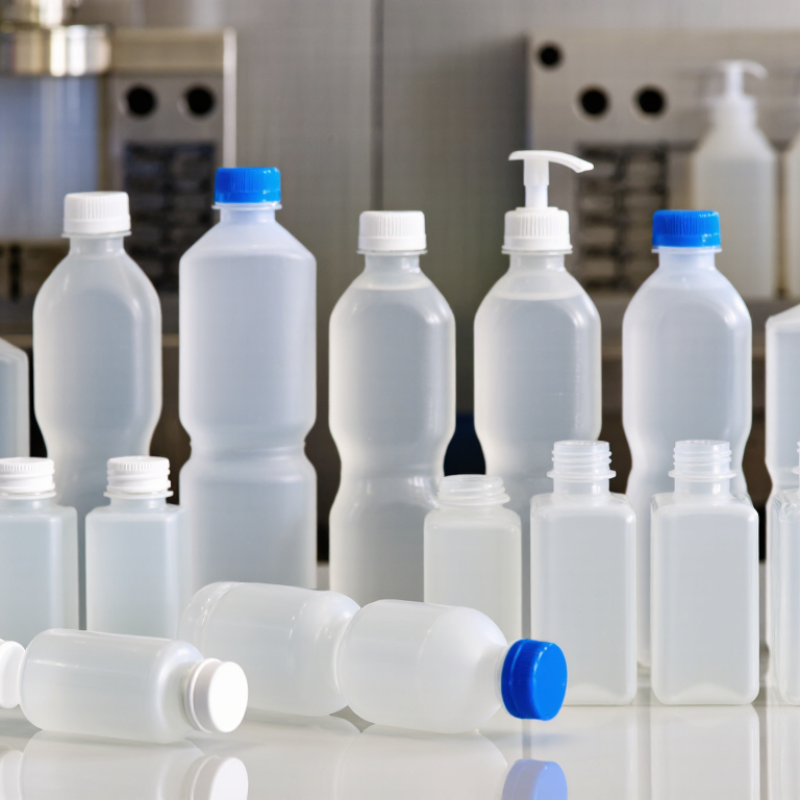
Custom PET bottles are containers made from polyethylene terephthalate and tailored to a product’s needs. Their shape, volume, color, neck size, closure, and surface finish can all be adjusted. A 100 ml travel bottle may need thick walls, while a larger household bottle may require stronger shoulders and an easier grip.
PET offers low weight, good clarity, impact resistance, and practical recyclability where local systems support it. It also works well with screen printing, labeling, and molded details. A tighter neck is not always better. It can improve sealing, but it may slow filling or create dispensing problems.
Chinese manufacturers attract global buyers through broad tooling capabilities and integrated supply chains. Many can manage mold development, preform production, bottle blowing, decoration, and packing in one project. This may reduce communication gaps and shorten sampling time. However, a low quotation does not prove real value. Buyers should request material specifications, sample approval records, dimensional reports, leak tests, drop tests, and relevant food-contact or packaging compliance documents.
From practical sourcing experience, clear drawings prevent expensive revisions. Define bottle capacity, wall thickness, neck finish, closure torque, color standard, and expected annual volume before production. Ask how quality checks are recorded, not only whether inspection exists. Some suppliers may promise faster delivery than their equipment can support. A factory audit, pilot order, and written acceptance standard can expose that weakness early.
Choosing among China’s top 10 custom PET bottle manufacturers requires more than comparing prices. Evaluate their experience with your bottle shape, neck finish, volume, and production material. Ask for recent samples, mold drawings, and clear dimensional tolerances. A reliable manufacturer should explain resin grades, wall thickness, color consistency, and expected production speed.
Request evidence of quality control, including leak tests, drop tests, weight checks, and batch traceability. Review factory audit records and relevant food-contact documentation when needed. Confirm whether testing happens in-house or through an independent laboratory. Communication matters too. Slow replies, unclear quotations, or changing specifications may create costly delays. One mistake is trusting a polished sample too quickly. Mass production can reveal uneven walls, cloudy surfaces, or cap-fitting problems.
Tips: Compare at least three detailed quotations, not only unit prices. Ask about mold ownership, replacement costs, minimum order quantities, lead times, and packaging protection. A short video inspection can help, but an on-site audit offers stronger evidence. Check how the team handles rejected goods and corrective actions. Also, test the bottle with your actual liquid and filling process. A bottle that looks perfect may still deform under heat or pressure. Evaluation is never completely predictable. Good records reduce the uncertainty.
China’s custom PET bottle sector is broad, but reliability requires more than attractive samples. Grand View Research reported strong growth in the global PET packaging market, driven by lightweight formats and rising beverage demand. Smithers also identifies recycled content, lightweighting, and improved collection as major industry priorities.
The mold engineering specialist supports unusual necks, handles, and complex shoulders. The small-batch manufacturer suits emerging products with lower tooling exposure. A high-speed stretch-blow facility offers stable output for beverage packaging. The recycled-PET specialist focuses on traceability and material consistency. The thick-wall producer serves cosmetics and personal-care packaging. The food-contact specialist maintains documented resin and process controls. Important details matter.
The large-format manufacturer develops containers for household and industrial liquids. The lightweighting expert reduces resin use while protecting drop strength. The decoration-focused supplier manages color matching, sleeves, labels, and surface finishing. The export-oriented manufacturer combines inspection records, carton testing, and shipment coordination.
Buyers should request mold-flow analysis, wall-thickness data, leak tests, and batch samples. ISO 9001 certification can support process confidence, but it cannot replace factory verification. A supplier may show excellent prototypes yet struggle during mass production. That weakness is easy to miss.
Real experience matters. Ask to inspect production lines, review corrective-action records, and confirm resin documentation. The best profile is not always the cheapest quotation. Sometimes, a slower supplier gives clearer evidence.
Choosing among the top 10 custom pet bottle manufacturers requires more than comparing quotations. PET offers clarity, light weight, and strong shelf appeal. HDPE provides better opacity and impact resistance. Ask how each factory tests wall thickness, cap fit, leakage, and drop performance. A bottle may look perfect on screen but fail after filling.
Design flexibility also affects cost. Complex shoulders, textured surfaces, and unusual necks require special molds. Confirm mold ownership, revision limits, minimum order quantities, and sample timelines. Service quality appears in small details, such as response speed, technical drawings, and packaging advice. Production capacity matters too. Review monthly output, equipment condition, quality-control staffing, and realistic lead times. A large factory is not always the most reliable choice.
Tips: Request three physical samples and test them with your actual liquid. Check weight, grip, sealing, and transport damage. Compare complete costs, including molds, cartons, inspection, and delivery. Ask for material certificates and batch records where applicable. Low prices can be attractive, but hidden rework costs may erase the savings. I have seen attractive prototypes perform poorly under heat or repeated handling. That risk deserves honest attention.
Choosing among China’s top custom pet bottle manufacturers requires more than comparing factory photos and quoted prices. Start with the bottle’s actual purpose, capacity, neck size, resin type, and filling process. A manufacturer should explain whether PET, recycled PET, or another approved material fits your product. Ask for technical drawings, resin documentation, mold ownership terms, and test reports.
Request physical samples before approving production. Check wall thickness with a gauge, not only by hand. Fill bottles with your product and observe leakage, deformation, odor, and cap compatibility after storage. Samples reveal more. A polished prototype can still hide weak quality control. During one project, I focused too heavily on appearance and overlooked pallet stability. That mistake increased transport damage and delayed delivery.
Evaluate the factory’s process control, not just its machinery. Reliable suppliers can show inspection points, batch records, dimensional tolerances, and corrective-action procedures. Confirm their experience with your order volume, color requirements, decoration method, and delivery schedule. Clear answers matter. Ask how they handle mold changes, rejected units, and urgent replacements.
An on-site audit or independent inspection can verify production conditions and worker safety practices. Check whether the manufacturer communicates in practical details, especially when drawings or samples change. Compare total cost, including tooling, packaging, testing, freight, and possible rework. The cheapest quotation may become expensive later. Allow time for pilot production, because real production often exposes problems that meetings never reveal.
| No. | Evaluation Dimension | What a Reliable Manufacturer Should Provide | Practical Benchmark or Technical Fact | Recommended Verification |
|---|---|---|---|---|
| 1 | PET Material Quality | Use of bottle-grade polyethylene terephthalate with consistent clarity, strength, and color. | PET density is commonly approximately 1.33–1.39 g/cm³. Recycled PET content should be declared separately from virgin PET. | Request resin specifications, material certificates, and recycled-content declarations. |
| 2 | Available Bottle Capacity | Capability to develop custom bottles for different product volumes and filling applications. | Common PET bottle formats include small personal-use sizes, standard household sizes, and larger industrial or refill formats. | Confirm the target volume, overflow capacity, fill level, and dimensional tolerance. |
| 3 | Neck Finish Compatibility | Accurate neck dimensions that match the selected cap, pump, sprayer, or dispensing closure. | Neck finish selection affects closure fit, sealing performance, tamper evidence, and filling-line compatibility. | Request a technical drawing showing neck diameter, thread profile, height, and tolerance. |
| 4 | Custom Mold Development | In-house or controlled mold design, prototyping, modification, and maintenance. | Mold cost and development time depend on bottle geometry, cavities, steel selection, texture, and required precision. | Clarify mold ownership, revision policy, maintenance responsibility, and replacement-part terms. |
| 5 | Production Process | Suitable stretch-blow molding equipment and stable process control for repeatable bottle quality. | The preform is heated and stretch-blow molded; process settings influence wall distribution, clarity, strength, and weight. | Review equipment capability, cavity count, production capacity, and process-control records. |
| 6 | Quality Inspection | Documented inspection for dimensions, weight, appearance, leakage, top-load strength, and closure fit. | Quality limits should be defined before mass production rather than judged only by visual inspection. | Request a quality-control plan, approved sample, inspection report, and defect classification standard. |
| 7 | Food-Contact Compliance | Material and production documentation appropriate for the intended market and product category. | Requirements differ by market; examples include U.S. food-contact rules and European food-contact plastics requirements. | Specify the destination market and request migration, composition, and compliance documentation. |
| 8 | Decoration Options | Support for labeling, screen printing, sleeves, coating, embossing, or other approved decoration methods. | Decoration selection affects minimum order quantity, production sequence, appearance, recyclability, and cost. | Approve color standards, artwork files, print tolerances, adhesion tests, and pre-production samples. |
| 9 | Minimum Order and Lead Time | Clear commercial terms for sampling, tooling, first production, repeat orders, packaging, and delivery. | Custom tooling, decoration, imported materials, and testing can extend the schedule compared with standard stock bottles. | Obtain a written quotation separating tooling, unit price, packaging, testing, freight, and payment terms. |
| 10 | Sustainability and Recyclability | Design guidance for lightweighting, recycled PET content, material simplicity, and efficient packaging. | Clear PET packaging is generally compatible with established PET recycling streams when labels, closures, adhesives, and additives are properly selected. | Ask for bottle weight, recycled-content options, recyclability guidance, and packaging reduction proposals. |
Note: The table presents manufacturer-selection benchmarks and technical verification points without displaying company or brand names. Actual capabilities, certifications, prices, minimum order quantities, and lead times should be confirmed directly with each shortlisted supplier.
CONTACT US
|