
Choosing the right Deodorant Container in 2026 requires more than comparing shapes, colors, and unit prices. Global buyers must examine product compatibility, filling speed, transport durability, consumer handling, and end-of-life options. A stick container may suit wax-based formulas, while a roll-on bottle supports controlled application. Spray formats need stronger valves, reliable crimping, and careful pressure management. Small details matter.
Leyla Acaroglu, a circular design and packaging sustainability expert, has said, “Waste is a design flaw.” Her observation challenges buyers to review the entire container system, not only the visible package. A lightweight aluminum body can reduce material use, yet its coating or mixed closure may complicate recycling. Recycled plastic can lower virgin resin demand, but supply consistency and color limitations still require verification. No container wins everywhere.
This guide compares the leading deodorant container types for international purchasing teams. It considers material performance, customization, minimum order quantities, shipping protection, refill potential, and practical recycling conditions. Samples should be tested with the actual formula, cap, label, and filling equipment. Laboratory results alone may not reveal stress cracks after weeks in a humid bathroom.
Some assumptions need reconsideration. The cheapest option may create higher damage rates. The most attractive package may frustrate users. A refillable design may fail if replacement parts are difficult to source. Buyers should request technical data, migration testing, quality records, and honest supplier references before approving production. Regional infrastructure also matters. A theoretically recyclable container may not be recycled locally. That uncomfortable gap deserves attention.
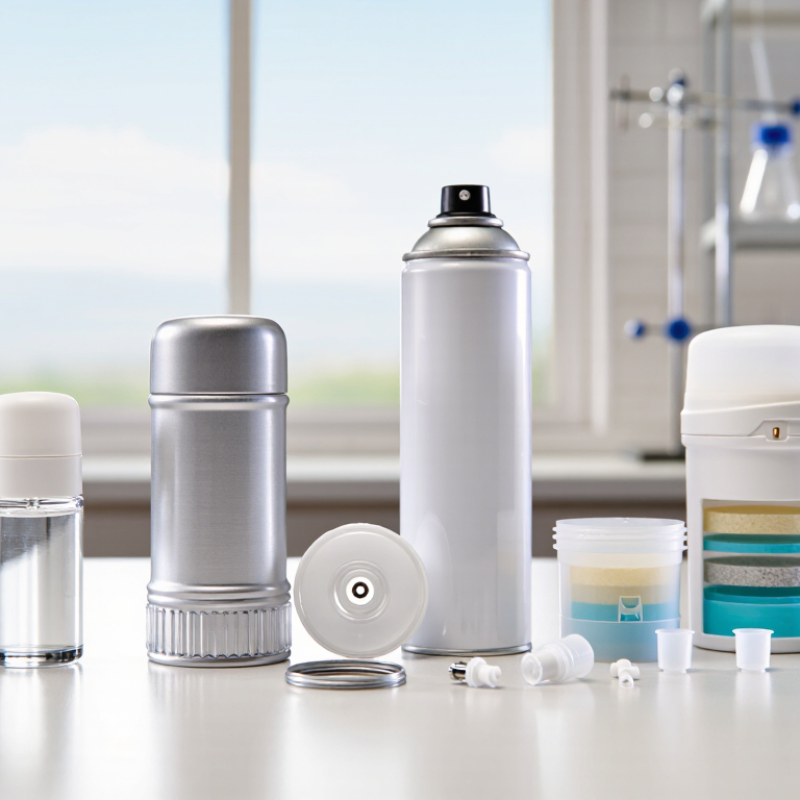
Aerosol cans, roll-on bottles, deodorant sticks, creams, gels, and refillable solids are the main deodorant container types in 2026. Each format serves a different buying priority. Aerosol cans provide quick, dry coverage, but they require pressure-resistant packaging and careful transport planning. Roll-on bottles use less material and offer controlled application. However, their liquid formulas may leak around the neck or cap.
Deodorant sticks remain practical for travel, retail display, and automated filling. Their wide opening supports easy product release, while plastic selection affects durability and recyclability. Cream and gel containers, usually jars or squeeze tubes, create a softer application experience. They also need stronger sealing because users touch the product directly. Refillable solid containers reduce repeated packaging use, although reverse logistics can be difficult across markets.
Grand View Research valued the global deodorants market at more than USD 25 billion in 2023 and expects continued growth through 2030. Euromonitor International’s 2025 beauty and personal care analysis also highlights convenience, portability, and sustainability as important purchase factors. These reports measure product markets, not every container category, so direct format shares remain imperfect. That matters. A low-material pack may still perform poorly if it breaks during export or cannot protect the formula from heat. In sourcing reviews, buyers should test leakage, closure strength, shelf stability, filling compatibility, and local recycling access before choosing a container.
Deodorant container materials directly influence protection, stability, and daily user experience. A package is not merely a shell. It controls moisture, oxygen, fragrance loss, and dispensing accuracy. According to UNEP’s 2023 report, packaging creates about 40% of global plastic waste. This makes material selection both a performance and sustainability decision.
Polypropylene suits many sticks because it is lightweight, chemically resistant, and economical. However, poor molding can leave thin walls or uneven threads. Small flaws matter.
Recycled content may also vary in odor, color, and consistency, so suppliers need batch testing. Aluminum provides strong protection and a premium hand feel, but internal coatings require compatibility checks.
Fragrance oils and active ingredients can interact with unsuitable coatings over time. ISO 22716 emphasizes controlled production and documented quality procedures for cosmetic products.
Airless plastic systems can reduce product exposure during dispensing, while conventional roll-on bottles need reliable ball fit and leak testing.
The Packaging Europe market reports repeatedly identify recyclability and material reduction as major packaging priorities, yet lightweighting can weaken impact resistance.
I would not call any format perfect. A lighter container may reduce transport emissions, but it can crack during hot warehouse storage.
Testing should include temperature cycling, drop tests, torque checks, and long-term formula compatibility. Use real distribution conditions. That is where attractive packaging often fails.
Choosing a deodorant container starts with formula behavior, not shelf appearance. Anhydrous sticks need rigid tubes with smooth elevators and tight closures. These features prevent crumbling and reduce residue around the cap. Keep it simple. Cream formulas usually suit wide-mouth jars or squeeze tubes. Squeeze tubes offer cleaner dosing, but their shoulder design can trap product.
Roll-ons work well with liquid formulas, especially those containing alcohol or water. Their ball size controls application and drying time. Glass feels premium, yet it adds weight and breakage risk during international shipping. Lightweight plastic improves logistics, although compatibility testing remains essential. Aerosol formats require pressure-resistant cans, reliable valves, and protective caps. They are practical, but filling and transport controls demand more technical planning.
Grand View Research valued the global deodorants market at about USD 27.5 billion in 2023, with continued growth projected through 2030. This expansion increases demand for convenient, portable formats. Sustainability also needs evidence. The OECD’s Global Plastics Outlook reports that only 9% of plastic waste was recycled globally in 2019. Therefore, a mono-material container may improve sorting, but local recycling access still decides its real impact. A refill system can reduce material use, yet it may fail if refills are awkward or expensive. That is the uncomfortable part. The best container is not always the lightest one. Testing should cover leakage, odor interaction, drop resistance, temperature changes, and consumer handling before global launch.
2026 Best Deodorant Container Types for Global Buyers
Global buyers should compare deodorant containers through landed cost, sustainability, and customization. In sourcing reviews, molded plastic sticks usually offer the lowest tooling cost and reliable filling speed. PCR-HDPE can improve recycled content claims, but supply quality varies between regions. Aluminum provides a premium feel and strong barrier performance. However, it often increases material and freight costs. Paperboard push-up tubes look distinctive, yet moisture resistance and filling compatibility require careful testing.
Sustainability needs evidence, not attractive language. The OECD’s Global Plastics Outlook reports that only 9% of plastic waste was recycled globally in 2019. This makes mono-material designs, recyclable components, and clear disposal instructions important. Refill systems may reduce packaging waste, but reverse logistics can weaken their environmental advantage. The cheapest option is not always the better option. Sometimes, it is only cheaper at factory level. Buyers should request lifecycle data, recycled-content verification, and regional recycling guidance before approving a design.
Tips: Compare total landed cost, not unit price. Ask for samples after heat, drop, and leakage tests. Check whether labels, caps, and springs can be separated easily. Request tooling ownership terms in writing. Custom colors and embossing add appeal, but they may create minimum-order risks. I would also question vague carbon claims. They sound convincing, but they are often incomplete. According to the Sustainable Packaging Coalition’s guidance, packaging decisions should consider material sourcing, recovery systems, and actual local infrastructure.
A comparative 1–5 planning index for cost competitiveness, sustainability, customization potential, and international logistics suitability. The comparison reflects common packaging-material characteristics and excludes company or brand data.
Higher scores indicate stronger performance for global sourcing decisions. Aluminum and PCR plastic offer strong sustainability potential, paperboard tubes support broad customization, while conventional plastic sticks generally provide the lowest cost and reliable logistics performance.
For global deodorant buyers, container choice starts with compliance, not appearance. Stick, roll-on, aerosol, and cream formats need different packaging evidence. Suppliers should provide material specifications, batch traceability, and compatibility data. The formula must not soften plastic, corrode metal, or clog the actuator. Small details matter. A leaking cap can ruin a full carton.
International sourcing requires clear testing protocols. Ask for closure torque records, drop testing, leakage checks, and accelerated stability results. For plastic parts, confirm resin type, recycled content, and compatibility with the formula. Glass and metal need coating or impact controls. Aerosol formats require pressure testing, valve performance checks, and transport documentation where applicable. Packaging and labeling should align with relevant cosmetic standards, including ISO 22715 where applicable, plus the destination market’s rules. One global label is rarely enough. Language, net quantity, ingredient declarations, recycling marks, and warnings may change by country.
I would also audit the supplier’s production line, not only review certificates. Check cap fit by hand, inspect print sharpness, and sample cartons from different batches. Certificates can be valid yet incomplete. That is an uncomfortable gap. Ask who performed each test, when it was completed, and whether samples matched the current design. Sustainable packaging deserves equal scrutiny. Lightweight parts may reduce shipping emissions, but fragile components can increase rejects and waste. A practical specification should balance protection, recyclability, filling speed, and consumer handling. Buyers sometimes overlook the last point. If the container feels awkward, repeat purchases may suffer.
| Container Type | Common Primary Materials | Typical Product Format | Key Packaging Advantages | Main Sourcing Risks | Common Material Identification | International Standards and Compliance Checks | Recyclability Considerations | Global Buyer Suitability |
|---|---|---|---|---|---|---|---|---|
| Plastic Stick Container | Polypropylene (PP); sometimes high-density polyethylene (HDPE) | Solid deodorant or antiperspirant stick | Lightweight, low breakage risk, efficient use of space, easy twist-up dispensing, and broad decoration options | Multiple-material assemblies can reduce recyclability; threaded mechanisms and moving parts require functional testing | PP: resin identification code 5 HDPE: resin identification code 2 | Verify material composition, closure fit, torque performance, leakage resistance, compatibility with the formula, and cosmetic packaging safety requirements such as ISO 22715 | Best when the body, cap, and mechanism use compatible recyclable materials and labels or coatings do not hinder sorting | High |
| Roll-On Bottle | Glass or PP/HDPE bottle with PP or HDPE closure; stainless-steel or plastic ball | Liquid deodorant or antiperspirant | Controlled application, premium appearance, relatively low product waste, and good suitability for liquid formulas | Glass may break during transport; ball and neck dimensions must be matched carefully to prevent leakage or poor product flow | Glass: commonly resin identification codes 70–74 PP: resin identification code 5 HDPE: resin identification code 2 | Check container-closure integrity, inversion and vibration leakage tests, ball corrosion resistance, formula compatibility, and labeling requirements in each destination market | Glass is widely recyclable where collection systems exist; plastic versions may be easier to transport but depend on local recycling infrastructure | High |
| Aerosol Can | Tin-plated steel or aluminum with valve, actuator, dip tube, and protective cap | Pressurized spray deodorant or antiperspirant | Fine spray distribution, hygienic closed system, strong shelf presence, and efficient dispensing of liquid or emulsion products | Pressurized-packaging regulations, flammability classification, valve compatibility, corrosion, and transport restrictions require specialist control | Steel: resin identification code 40 Aluminum: resin identification code 41 | Assess pressure resistance, burst pressure, corrosion testing, valve crimp quality, flammability classification, safety warnings, and applicable dangerous-goods transport rules. UN 1950 may apply to aerosols; classification must be verified for the finished product | Steel and aluminum cans are technically recyclable, but they must be completely empty and accepted by the destination market's recycling system | High for spray formats |
| Bag-on-Valve Can | Aluminum or steel outer can with flexible internal bag and dispensing valve | Pressurized liquid, cream, foam, or spray deodorant | Product is separated from the propellant, which can support controlled dispensing and reduced product contact with the outer can | More complex component structure, specialized filling equipment, higher validation requirements, and potential recycling challenges if components are not separated | Steel: resin identification code 40 Aluminum: resin identification code 41 | Verify pressure and leakage performance, valve and bag compatibility, filling-process validation, flammability and transport classification, and applicable aerosol safety requirements | Metal recovery is possible, but the internal bag and valve may complicate sorting and processing; local recycling guidance should be confirmed | Medium to High |
| Squeeze Tube | HDPE, LDPE, PP, multilayer plastic, or plastic-aluminum laminate | Deodorant cream, gel, lotion, or balm | Lightweight, low shipping volume, low breakage risk, and suitable for controlled manual dispensing | Multilayer structures may not be recyclable; shoulder and seal design can affect residual product and leakage performance | HDPE: resin identification code 2 LDPE: resin identification code 4 PP: resin identification code 5 | Check seal strength, cap retention, drop testing, squeeze-force consistency, formula compatibility, migration assessment where relevant, and packaging claims substantiation | Monomaterial PE or PP tubes generally offer a clearer recycling pathway than multilayer or foil-laminated tubes, subject to local collection systems | High for cream and gel formats |
| Deodorant Cream Jar | PP or HDPE jar with plastic lid; glass jar options are also available | Deodorant cream, balm, or paste | Simple filling process, wide opening, easy product access, and good suitability for viscous formulas | Finger application may create hygiene concerns; wide openings can increase evaporation or contamination risk if the formula is not properly preserved | PP: resin identification code 5 HDPE: resin identification code 2 Glass: commonly resin identification codes 70–74 | Check microbiological safety of the finished cosmetic, closure fit, leakage, compatibility with oils and fragrances, tamper evidence where required, and required ingredient and warning information | Single-material jars are easier to manage; pumps, liners, spatulas, and mixed-material lids should be evaluated separately | Medium |
| Refill Cartridge System | PP, HDPE, aluminum, or a combination of reusable outer case and replaceable cartridge | Solid stick, cream, balm, or selected liquid formats | Can reduce repeat packaging consumption, support premium positioning, and separate the durable outer case from the consumable refill | Requires precise dimensional compatibility, reliable user assembly, clear instructions, and a practical collection or take-back pathway | Depends on the selected material; common codes include PP 5, HDPE 2, aluminum 41, and steel 40 | Validate refill fit, mechanical durability, user safety, product protection after opening, cleaning instructions, shelf life, and extended producer responsibility obligations in target markets | Potentially strong environmental performance when refills are materially simpler and the outer case is reused repeatedly; actual impact depends on consumer reuse and recovery rates | Medium to High |
| Paperboard Push-Up Tube | Paperboard with a moisture-resistant inner coating or liner; sometimes includes a plastic base or cap | Solid deodorant, balm, or wax-based formula | Paper-based appearance, low plastic content potential, and suitable for brand-neutral sustainable packaging programs | Moisture and oil resistance, structural deformation, dispensing consistency, and recycling compatibility require careful testing | Paper and board: commonly resin identification code 20–22 when coded; plastic components are coded according to their polymer | Check coating composition, oil and moisture resistance, compression and drop testing, product-package compatibility, recyclability claims, and destination-market labeling rules | Recyclability depends on the coating, liner, adhesives, and local paper-recycling acceptance; avoid unsupported “compostable” claims without appropriate evidence and certification | Medium |
CONTACT US
|
